
Small Circles, Big Consequences: Us, Them and the Space Between

For the vast majority of human history, Homo sapiens lived in small, tightly knit tribal groups, a structure that continues to shape modern social behavior, even in digital spaces. While this model fostered strong cohesion, shared purpose, and resilience, history demonstrates that when tribal identity hardens into exclusion, it can drive extreme violence, as seen in events like the Rwandan genocide and other modern ethnic conflicts. Today, although society has scaled beyond tribal life, the underlying instincts persist—manifesting in political polarization and identity-driven rhetoric—highlighting the enduring tension between our evolutionary wiring and the demands of modern civilization, and underscoring the need to manage, rather than eliminate, tribal dynamics.
Missing Data: FBI Investigation into Cluster of Deaths and Disappearances Among US Scientists
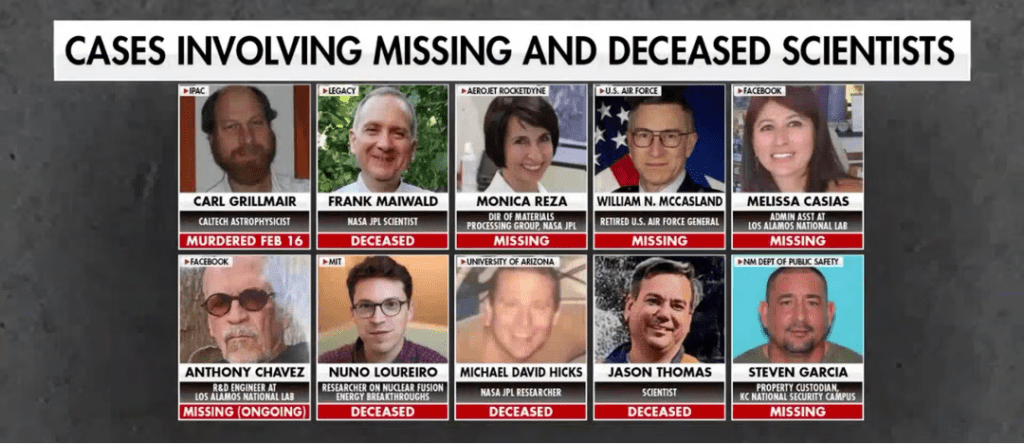
US federal authorities, led by the FBI, are investigating a cluster of at least 10–11 deaths and disappearances involving scientists and officials with access to sensitive nuclear, aerospace, and defense-related programs.
Forecasting Friction: When Predictions Meet Reality

As Q1 2026 concludes, early developments are aligning closely with RMS International’s Global Threat Forecast, reinforcing a security environment defined by converging geopolitical tensions, infrastructure fragility, and emerging technologies.