
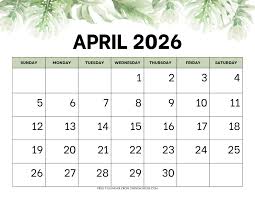
Executive Summary:
April 2026 presents a layered risk environment driven by convergence:
- Religious density (Passover → Easter → Orthodox Easter) creates repeated high-volume soft-target gatherings across multiple faith communities.
- Sustained protest cadence (Apr 5, 15, 19, 22, 25, 30 + recurring DC activity) indicates a month-long rhythm of civic disruption, not isolated events.
- Financial friction (Good Friday market closure) introduces localized economic and operational irregularities despite no federal bank holidays.
Bottom line: April is defined less by singular flashpoints and more by persistent, overlapping activity cycles—religious, political, and civic—that collectively sustain an elevated baseline risk across U.S. urban centers, particularly downtown corridors, government zones, and large venue environments.
Risk Scale
🟢 Low | 🟡 Moderate | 🟠 Elevated | 🔴 High
Week 1: April 1 – April 5
Apr 1 (Wed) — 🟠 Elevated Passover begins (sundown) + DC rush-hour protest → Increased evening congregation traffic; localized DC disruptions
Apr 2 (Thu) — 🟡 Moderate Passover + Jehovah’s Witness Memorial → Elevated evening movement near religious sites
Apr 3 (Fri) — 🟠 Elevated Good Friday (market closures / early close) → Financial market disruption + heavy church attendance
Apr 5 (Sun) — 🔴 High Easter Sunday + Nationwide protest activity (Hands Off mobilizations) → Large gatherings + protest convergence = highest soft-target risk day of the month
Week 2: April 6 – April 12
Apr 6–9 (Mon–Thu) — 🟡 Moderate Passover continues → Community schedule shifts; predictable but dense gatherings
Apr 8 (Wed) — 🟠 Elevated Recurring DC protest window → Rush-hour disruption risk (government corridor)
Apr 10 (Fri) — 🟡 Moderate Orthodox Good Friday → Increased localized religious activity
Apr 12 (Sun) — 🟠 Elevated Orthodox Easter (Pascha) → Secondary wave of large-scale religious gatherings
Week 3: April 13 – April 19
Apr 14 (Tue) — 🟡 Moderate Vaisakhi (Sikh/Hindu observance) → Parades, temple gatherings in key metro areas
Apr 15 (Wed) — 🟠 Elevated Tax Day protests (national) → Government buildings, financial districts = focal points
Apr 19 (Sun) — 🟠 Elevated Symbolic protest date (Revolution anniversary / “No Kings” events) → Ideologically mixed demonstrations; potential counterprotests
Week 4: April 20 – April 26
Apr 20 (Mon) — 🟡 Moderate First Day of Riḍván (Bahá’í) → Limited operational impact; localized observance
Apr 22 (Wed) — 🟠 Elevated Earth Day demonstrations (nationwide) → Activism near government, campuses, infrastructure sites
Apr 25 (Sat) — 🟠 Elevated Multi-city protest activity (“No Kings” / local actions) → Weekend amplification = higher turnout probability
Week 5: April 27 – April 30
Apr 30 (Thu) — 🟠 Elevated “100 Days” political protests (emerging trend) → Evening rallies; potential for coordinated multi-city actions
About RMS International
The world is unpredictable. Your security shouldn’t be. Founded in 2012, RMS International delivers discreet executive protection, intelligence, cyber security, and global travel risk management. From our Risk Operations Center in West Palm Beach, Florida, our analysts maintain continuous global overwatch—tracking emerging threats and safeguarding operations across five continents.
RMS International — peace of mind in a chaotic world.