
*Originally Published in RMS International’s 2026 Global Threat Forecast Dec 2025
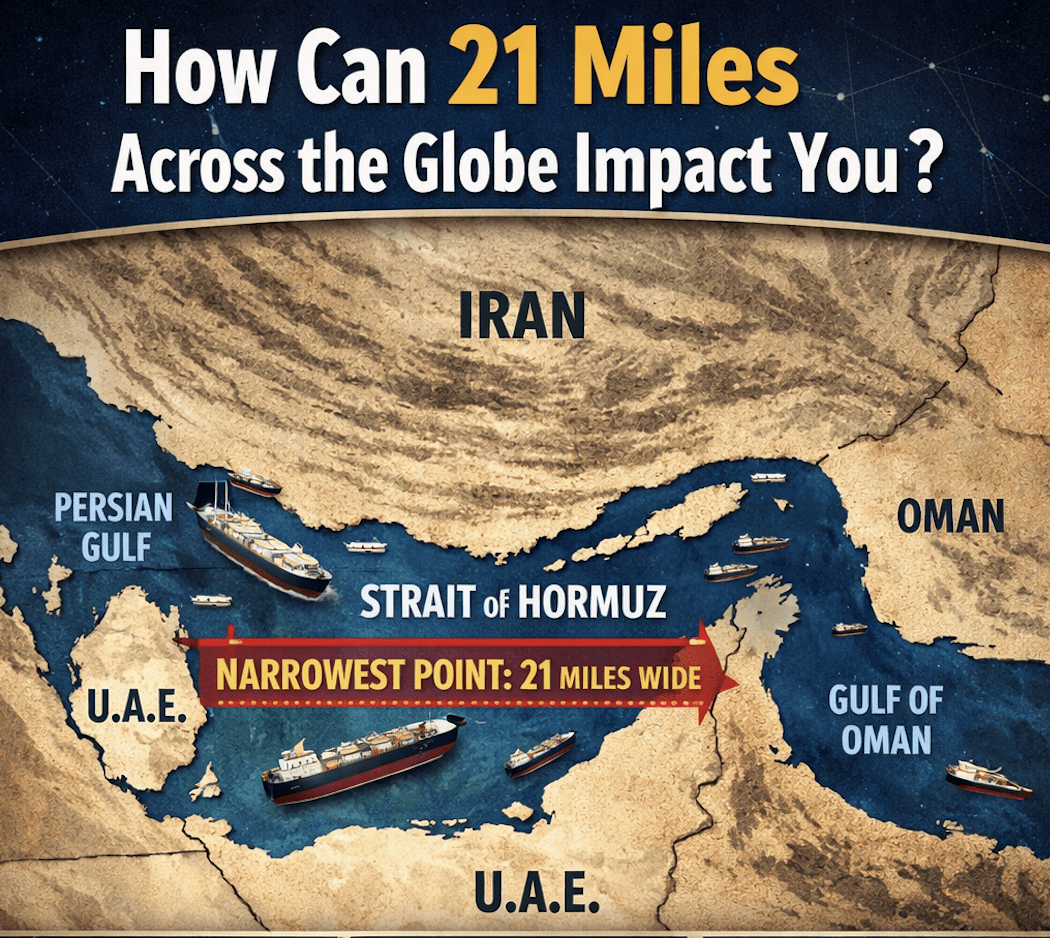
There are places on the map that seem almost accidental, thin seams of water, narrow corridors of blue that appear, in the abstraction of an atlas, as little more than aesthetic flourishes. The Strait of Oman is one of these deceptions: a slick of sea between Iran and Oman, a gateway that opens into the tighter, more politically charged passage of the Strait of Hormuz. In photographs it looks serene, a sweep of sapphire bordered by desert escarpments. But in 2026, serenity has become a kind of misdirection. The Strait of Oman is no longer a mere transit point; it is a vulnerability with a name.
For nearly a decade, global attention has focused on Hormuz, the famous chokepoint through which a fifth of the world’s oil supply moves. Yet it is the Strait of Oman—the approach, the funnel, the maritime vestibule—that has quietly become the more unpredictable risk. If Hormuz is the lock, the Strait of Oman is the hallway leading to it, where malign actors find room to maneuver and ambiguity becomes a strategic resource. The strait is wide enough for plausible deniability, narrow enough for disruption, and politically charged enough that every incident carries the gravity of implication.
In the coming year, that implication feels heavy. The waters have grown crowded with patrol vessels, drone swarms, and merchant ships re-routing in hesitant zigzags. Iranian naval craft linger at the edges of shipping lanes with the unblinking attention of a cat waiting for a tremor in the grass. Non-state actors, some ideological, others opportunistic, use the expanse of open water to stage attacks that register not as declarations but as insinuations. A tanker harassed by fast boats. A cargo ship’s GPS mysteriously compromised. A commercial drone found drifting above the superstructure of a container vessel like a curious metallic gull.
The international community understands the risk but remains trapped in the choreography of cautious diplomacy. Washington issues warnings layered with caveats. European capitals speak of “regional tensions,” the delicate euphemism of governments that depend on uninterrupted flows of energy. Gulf states, more proximate and more vulnerable, harden their maritime defenses even as they attempt to moderate the ambitions of their larger neighbors.
In the background, the global supply chain hums with quiet dread. The Strait of Oman, after all, is not simply a gateway—it is a hinge. It is the place where oil tankers from Iraq, Kuwait, and the UAE meet the open ocean; where LNG carriers trace their long arcs toward Asia; where global shipping routes knot themselves into patterns dictated as much by geopolitics as by geography. A single calculated disruption—whether a military confrontation, a cyber-induced navigational error, or the deliberate sinking of a vessel—could send shockwaves through energy markets already frayed by conflict and climate volatility.
In the approaching year, the forecast suggests an uncomfortable truth: the Strait of Oman is entering a period of strategic contest in which risk is not a side effect but a currency. Iran sees it as leverage against sanctions and international pressure. Gulf monarchies view it as the frontline of economic survival. Great-power rivals interpret it as a theater for influence, a maritime chessboard on which every move is visible and none is simple. The world’s major shippers and insurers, caught in the middle, price in their anxieties with every recalculated route and every spike in marine premiums.
The irony is that the strait itself remains indifferent. Its waters shift with the same gentle tides they always have, its winds carry the same dry warmth from Oman’s mountains and Iran’s coast. But beneath that calm lies a geopolitical fault line that could, with little warning, fracture the rhythms of global commerce. The Strait of Oman is a reminder that the world’s most consequential vulnerabilities are often disguised as narrow spaces—passages so small they seem manageable, until they aren’t.
In 2026, the international community will not face an imminent catastrophe in the Strait of Oman. What it faces is something subtler, more persistent, and more difficult to resolve: a chokepoint whose risks are accumulating not through one dramatic event, but through the steady layering of tension, ambition, and proximity. The strait is tightening, not physically, but politically. And the world must learn to navigate that narrowing lane with a steadier hand.
About RMS International
The world is unpredictable. Your security shouldn’t be. Founded in 2012, RMS International delivers discreet executive protection, intelligence, cyber security, and global travel risk management. From our Risk Operations Center in West Palm Beach, Florida, our analysts maintain continuous global overwatch—tracking emerging threats and safeguarding operations across five continents.
RMS International — peace of mind in a chaotic world.
#StraitOfOman #MaritimeSecurity #GlobalTrade #EnergySecurity #Geopolitics #Chokepoints #SupplyChainRisk #HybridThreats #GrayZoneConflict #MiddleEast #Hormuz #OilMarkets #LNG #NavalSecurity #CyberMaritime #GPSJamming #CriticalInfrastructure #RiskIntelligence #StrategicCompetition #GlobalEconomy