
Executive Summary
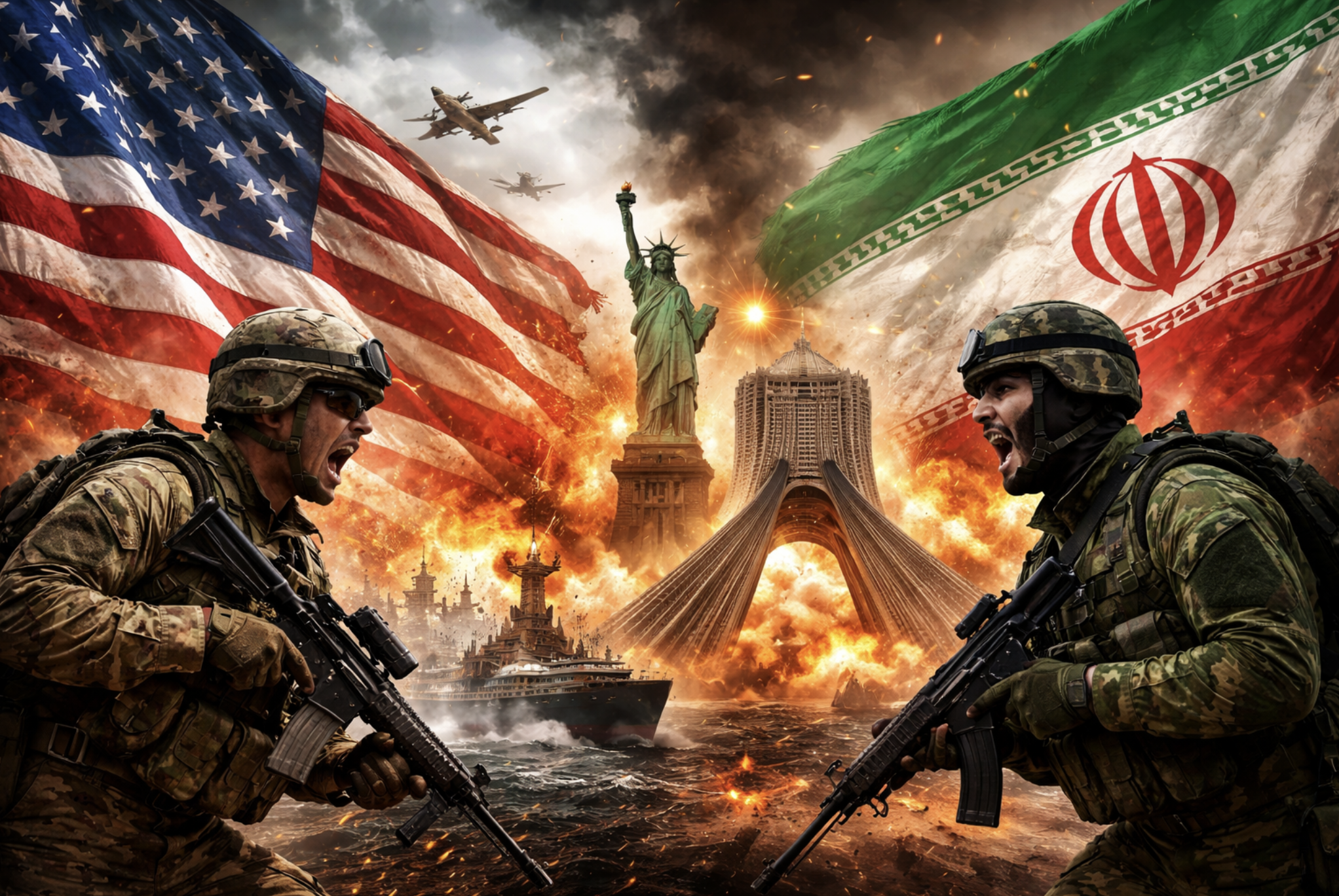
RMSI’s Intelligence Services assesses a MODERATE likelihood of the US attacking, responding, invading, or temporarily occupying Iran in the first quarter of 2026 with at least two points of verification. This is NOT a forecast of intent, policy endorsement, or inevitability; however, please consider the following primary uncertainty drivers: unpredictable trigger events, miscalculation, or third-party escalation.
- Potential Early Warning Signals: Military posture and capability indicators; Political, legal, and domestic restraints; Strategic Signaling and deterrence messaging; Historical precedent and pattern matching; Indications and trigger warning monitors.
Limited US Kinetic Action Targeting Iran
Any conflict between the US and Iran is likely to start as limited US kinetic action targeting Iran. This includes air and missile strikes, maritime seizures, or retaliatory strikes. The likelihood of limited US kinetic action targeting Iran is MODERATE-HIGH in Q1 2026, substantiated by reports of a heightened US naval posture, including both a carrier and multiple destroyers, in the Middle East, as well as several F22 currently stationed in Israel. This is consistent with US military tactics and the Trump doctrine of deterrence or “peace through strength,” as well as strike-readiness. Additionally, both market and geopolitical analysts are explicitly modeling a “limited action” pathway as a plausible near-term scenario designed to pressure Tehran while avoiding a regional war. Finally, recent nationwide protest across Iran greatly reduce public support for the regime.
The likelihood of limited US kinetic action against Iran is likely to increase should US forces or partners initiate a strike in a way that triggers retaliatory authority, if clear and direct intelligence determines a credible imminent threat, or a sudden rapid escalation cycle which involves proxies, shipping lane restrictions, or regional bases.
Large-Scale US Invasion or Temporary Occupation of Iran
RMSI’s Intelligence Services assesses a VERY LOW likelihood of a large-scale US invasion or temporary occupation of Iran in the first quarter of 2026. Any US invasion or temporary occupation of Iran would require a massive force flow, political authorization, and sustained logistics that would be hard to conceal. Preoperational logistics would be difficult to reconcile with the prevailing “avoid escalation” that seems to most accurately describe US interests in the area. Any congressional and political headwinds would already be visible in the form of War Powers efforts explicitly aimed at limiting or ending unauthorized hostilities with Iran.
However, a large-scale US invasion or temporary occupation of Iran remains possible, should a large-casualty attack on US forces or a major US homeland-linked incident attributed to Iran occur. Additionally, invasion remains possible if there is a rapid collapse of deterrence leading to a broader regional conflict or a major change in political strategy with explicit US congressional buy-in.
Early Warning Indicators
There are several possible “early warning” indicators that would suggest a US-led limited kinetic strike targeting Iran is imminent. These indicators should be monitored no less than once per week. US Military posture and force movement, such as a US carrier strike group repositioning toward strike baskets, a bomber task force forward basing (Diego Garcia, UK, Guam), a surge in intelligence, surveillance, and reconnaissance (ISR) including persistent UAV orbits and RC-135 patterns, and/or sealift and airlift flows beyond merely routine rotations. Limited kinetic strikes require readiness, while invasions require visible sustainment.
Additionally, US kinetic action could be prompted by trigger events or catalysts. If any attack on US or allied forces results in casualties, attacks on shipping lanes, energy infrastructure, or embassies is attributed to Iran or its proxies, conflict may be imminent. Lastly any Iranian-backed targeted assassinations or attempts targeting US or allied senior leadership may trigger imminent conflict. Historically, the aforementioned examples have been the single biggest driver of a US kinetic response.
Several domestic US political and legal signals could serve as indicators for imminent conflict. Any emergency congressional briefings, especially if they are closed-door or classified, may indicate imminent action. Any momentum regarding the War Powers resolutions could potentially serve as an indicator. Additionally, should White House officials transition language from “avoiding escalation” to “defending US interests” may be indicative of upcoming kinetic action. Additionally, any bipartisan statements signaling tolerance for force, especially in the current hyper-partisan climate, may signal a potential escalation. Large-scale invasions require durable political authorization; however, limited strikes do not.
International relations, diplomatic and alliance posturing could serve as a potential indicator of military escalation. Any evacuation or travel advisories for diplomats and their families is a strong indicator of imminent action, as well as any quiet coordination with NATO, Gulf partners, and Israel. Significant and public breakdowns or suspensions of any back-channel communications between the US and Iran or third-party negotiating states, as well as UN Security Council emergency sessions are all possible indicators of imminent action. Generally, the US informs allies before, even in a limited capacity, and not after kinetic action is taken.
As the US and Iran do not currently engage in diplomatic relations, a changing information environment and strategic messaging could serve as a potential early warning indicator. Signals may include coordinated information “leaks” to major media outlets, as well as an administration’s potential narrative shift from deterrence towards inevitability, may be indicative of impending action. Any increased use of the phrasing “self-defense, imminent threat, or red line” language is a potential early warning indicator. Lastly, any Iranian propaganda domestically preparing for an altercation may suggest potential conflict. The information sphere, to include news and social media, is often used by government officials to prepare and engage public opinion ahead of any use of force.
Financial analysts and traders often use economic and market signals to predict trends and patterns. Similarly, there are several economic and market indicators that may serve as early warning advisories. A sudden oil price spike unrelated to supply data, maritime insurance withdrawals around the Red Sea and Strait of Hormuz, airline route suspensions and shipping reroutes, as well as sanctions expansions timed with force posturing changes may indicate imminent kinetic action. Essentially, markets often react prior to any official announcements.
Lastly, any preparations on the side of Iran may signal potential action. Should Iran disperse air defense and missile technology, as well as engage in civil defense messaging to the general Iranian public, the potential for kinetic action is escalated. Any Iranian reposition proxy forces or hardening of command-and-control nodes, may suggest a potential and imminent state-based threat. Adversaries often telegraph the expectation of strikes through defensive posturing.
About RMS International
Founded in 2012, RMS International provides ad hoc and contracted executive and close protection services, corporate and residential security, travel security management programs, cyber security, and full-scale intelligence services. RMS International operates a state-of-the-art Risk Operations Center in West Palm Beach, Florida, providing 24/7/365 overwatch of global operations throughout the Americas, Middle East, Asia, Europe, and Africa. RMS International delivers peace of mind in a chaotic world. Connect with us at: www.RMSIUSA.com.
Methodology
The assessment is probabilistic and scenario-based, not predictive. It evaluates likelihood by type of action (limited strike vs. invasion/occupation) using a multi-indicator framework across five domains:
- Military Posture & Capability
- Political & Legal Constraints
- Strategic Signaling & Deterrence Logic
- Historical Precedent & Pattern Analysis
- Trigger & Escalation Indicators (I&W)
Each domain contributes weighted indicators to an overall likelihood band.
#USIran #MiddleEastSecurity #Geopolitics #StrategicIntelligence #RiskIntelligence #ThreatAssessment #GlobalSecurity #Deterrence #MilitaryPosture #KineticOperations #EarlyWarning #IndicatorsAndWarnings #IandW #ISR #ForcePosture #CarrierStrikeGroup #AirPower #MaritimeSecurity #DefenseAnalysis #OperationalReadiness #DutyOfCare #ExecutiveProtection #TravelRiskManagement #CorporateSecurity #ProtectiveIntelligence #RiskOperationsCenter #24x7Security #BusinessContinuity #CrisisManagement #Resilience #WarPowers #NationalSecurity #ForeignPolicy #AllianceDynamics #NATOSecurity #GulfSecurity #EnergySecurity #RedSeaSecurity #StraitOfHormuz #GlobalMarkets #EscalationRisk #LimitedStrike #RegionalConflict #ProxyConflict #DeterrenceFailure #StrategicSignaling #TriggerEvents #ConflictScenarios #CrisisIndicators #Flashpoints2026 #RMSInternational #RMSI #IntelligenceServices #RiskAdvisory #SecurityConsulting #DirectorOfIntelligence #StrategicOutlook #GlobalThreatForecast #PeaceOfMind #SecurityLeadership